


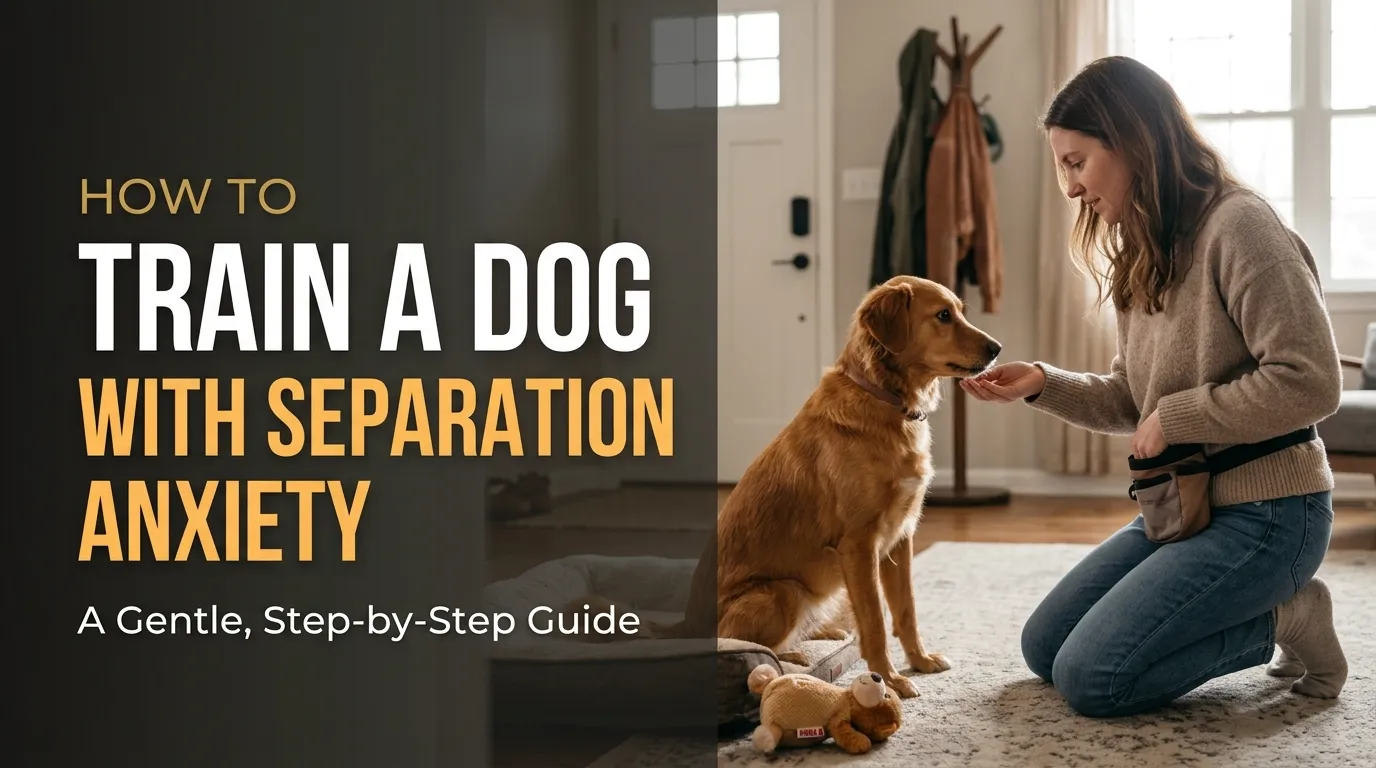
Some dogs panic when they are left alone. They bark for hours. They chew door frames, scratch at doors, or have accidents in the house, even if they are house trained.
If this sounds like your dog, you are not alone. Many owners come home to a chewed couch or an angry note from a neighbor. It is easy to feel guilty. It is also easy to feel fed up.
But your dog is not being bad, and he is not trying to get back at you. He is scared. You are his safe place. When you walk out, that safe feeling goes with you.
The good news is that most dogs can learn to stay calm at home alone. It takes time. There is no fix that works in one day. But small steps, done the same way each day, do work.
Is It True Anxiety or Just Boredom?
Not every noisy dog is an anxious dog. A bored dog chews a shoe or digs in the yard because he has energy and nothing to do. Give him a long walk and a good game of fetch, and he will most likely settle down.
A dog with true separation anxiety is in a panic. He may drool, pace from room to room, scratch at the door, or whine the whole time you are gone. Some dogs hurt themselves when they try to get out of a crate or a room.
Here is a simple test. Set up your phone or a camera before you leave. Watch what your dog does in the first 15 minutes. A bored dog plays, chews a toy, then naps. An anxious dog starts right away and does not settle.
If your dog will not eat a treat when you are out, that is also a strong sign. A scared dog often turns down food he would love at any other time.
Why Separation Anxiety Happens
There is not always one clear cause. These are the ones we see most often:
- A big change at home, like a move, a new baby, or a death in the family
- A sudden change in your day. You were home all summer, and now you are at work for eight hours.
- A past in a shelter or in more than one home. Dogs like this can fear that they will lose their family again.
- Too little time spent getting used to people, places, and short times alone as a puppy
When a dog like this is left alone, his body stays on high alert. His heart beats fast. He pants and drools. Day after day, that stress is hard on him, and it is hard on you too.
Signs to Watch for Before You Leave
Your dog knows your routine better than you think. Shoes on. Keys in hand. Bag on your shoulder. He learns that these things mean you are going.
Watch for these early signs:
- Pacing or following you from room to room
- Whining, panting, or breathing fast while you get ready
- Drooling when he is not hot or tired
- Refusing food or treats he loves
You can start to break this link at home. Pick up your keys, then sit back down and watch TV. Put your shoes on, then make coffee. Do these small things many times a day, with no trip at the end. In time, they stop being a warning sign for your dog.
Common Mistakes That Make It Worse
Big hellos and long goodbyes. If you make a big fuss when you leave and when you get back, you teach your dog that these times are a big deal. Keep both calm and short. When you come home, wait a few minutes. Say hello once your dog is calm.
Punishing the mess. Your dog did not chew the door to be spiteful. He did it while he was scared. If you punish him when you get home, he will fear the next time you leave even more.
Too much, too soon. Leaving a scared dog alone for a full work day and hoping he will get used to it does not work. It makes the fear grow. In training, you have to build up the time in small steps.
5 Methods That Help an Anxious Dog
1. Make the Crate a Safe Place
A crate can feel like a small den. Many dogs rest well in one and do less damage when you are out.
Crate training is much easier if it starts early, which is why we start it in our puppy classes from the first weeks. But an adult dog can learn too. It just takes more time. Crate training for an older dog works the same way, only slower: short, calm sessions, built up one step at a time.
Keep it simple. Leave the door open. Feed meals in or near the crate. Hide treats inside so your dog finds good things in there. Close the door for a few seconds at first, then for a few minutes, and open it while your dog is still calm.
One word of care: if your dog panics in a crate, barks nonstop, drools a lot, or tries to break out, do not force it. A crate can make a very scared dog worse. Use a safe room with a gate instead, and ask a trainer for help.
2. Leave for Short Times, Then Build Up
This is the core of the work. You teach your dog that being alone is safe by starting with times so short that he cannot panic.
- Walk to the door. Open it. Close it. Stay inside.
- Step out for 10 seconds. Come back in. Keep it calm.
- Repeat this many times over a few days.
- Add time in small steps: a minute, then three minutes, then five.
- If your dog cries or scratches, the last step was too big. Go back to the time that worked and stay there a bit longer.
Slow is fast here. Most dogs need weeks, not days. Short practice with treats and praise also helps your dog link good things to calm behavior. That kind of training with treats and praise works far better than scolding.
3. Give Alone Time a Good Payoff
Pick one special treat or toy. A food toy stuffed with something your dog loves works well. Give it to your dog just as you leave. Pick it up when you get home. He gets it only when he is alone.
In time, the lesson lands: you leaving means the best snack of the day shows up.
If your dog is too scared to touch it, do not push on alone. That level of fear needs a plan made for your dog. This is the kind of case our behavior curbing work is built for. A trainer works on the fear itself, not just the noise and the damage.
4. Keep the Day Easy to Guess
Dogs feel safer when the day runs in a pattern they know. Feed, walk, play, and rest at about the same times each day. It does not have to be exact to the minute. It just has to feel the same.
When your dog knows what comes next, there is less to worry about.
Not every dog can learn this in a group. If your dog gets stressed around other dogs or cannot focus in a busy room, one on one lessons may fit better. You work one on one with a trainer at our facility in Yukon, and you build a daily plan that fits your home and your work hours.
5. Tire the Body and the Brain
A dog with energy to burn will find it harder to rest. Walk or play with your dog before you leave for work. Let him sniff on the walk. Sniffing tires a dog out more than most owners expect.
Work the brain too. Short training games, a puzzle toy, or a treat hidden in a box all use up mental energy. A dog who has used his body and his brain is more likely to nap while you are out.
Just be honest with yourself about this one: exercise helps a lot with mild worry, but it will not fix a true panic on its own. If your dog still panics after a long walk, he needs the steps above, not just more fetch.
When to Call the Experts at K9 University
Call for help if any of these sound like your home:
- Your dog has hurt himself trying to get out
- The barking brings complaints, or the damage keeps growing
- You have worked on the steps above for a few weeks and see no change
- You feel worn out and stuck
For hard cases, a stay in our boarding school can help. Your dog stays with us and works with our trainers each day, while you learn the same plan to use at home.
At K9 University, our training always starts with the dog in front of us, not a one size plan. Contact us to book an evaluation, or call us at 405-231-4335. Tell us what your dog does when you leave. We will help you pick the next right step.
Your dog is not giving you a hard time. He is having a hard time. With calm steps and the right help, most dogs do learn that home alone can be safe.