


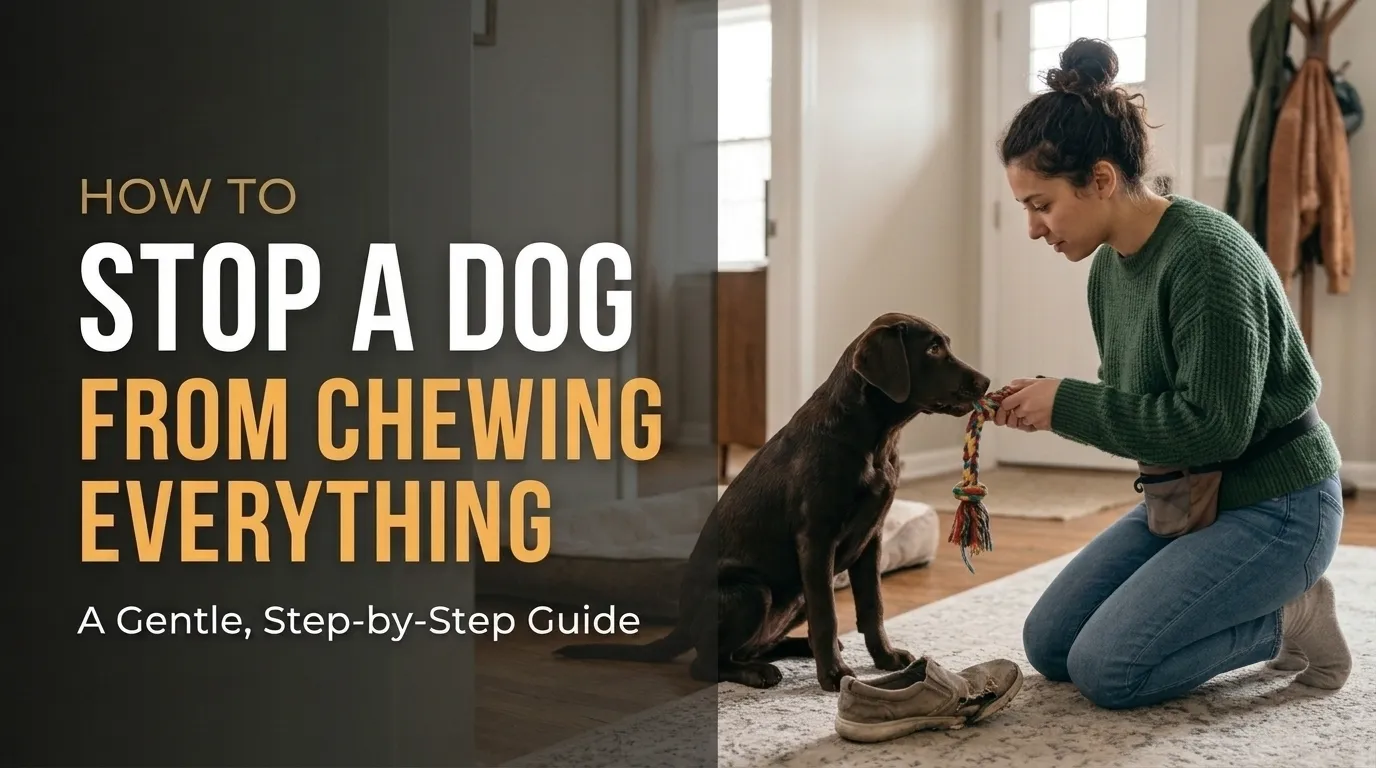
Dogs chew. That part is normal, and it is not going to change. Puppies chew to explore the world and to ease sore gums. Adult dogs chew because they enjoy it, and because it helps them settle.
The problem is not the chewing. The problem is the target: your shoes, your table legs, your remote, your baseboards.
You cannot fix that by hiding your shoes for the rest of his life. You fix it by working out why he chews, giving him better things to chew, and teaching him clear rules about what is his and what is not. Here is how that works.
Why Dogs Chew the Wrong Things
It is almost never spite. It is one of these four things.
Teething
Puppies chew for the same reason babies do. Their adult teeth are pushing through, their gums are sore, and chewing on something firm feels good. Puppies also learn about the world with their mouths, the way we use our hands.
Boredom and spare energy
Dogs are smart, and a smart dog with nothing to do will make his own fun. If the only fun thing at his height is a chair leg, that is what he will pick.
Anxiety
Many dogs chew to calm down. The chewing itself helps them feel a bit better, so a dog who is scared of being alone will often chew doors, crates, or window frames while you are out.
He was never taught the rules
If nobody showed him as a young dog which things are his, he does not know a table leg is different from a stick. In his mind, both are wood.
Why It Is Risky, Not Just Costly
The vet bills and the ruined shoes are the part owners feel first. Chewed furniture, torn carpets, and wrecked shoes add up fast.
The bigger risk is to the dog. Swallowed bits of plastic, cloth, or wood can block his gut, and a blockage often means emergency surgery. Chewed power cords can give a dog a bad shock, or worse.
And there is a third cost. Coming home to a wrecked room, day after day, wears down how you feel about your own dog. He picks up on your anger, even if you say nothing, and the chewing often gets worse, not better.
What Actually Works
1. Give Him Something Better to Chew
You will not stop a dog from chewing. So make the right choice the easy choice.
Keep a few good chew toys out, and swap them every few days so they stay interesting. Strong rubber toys that can be stuffed with food are a good bet. Fill one with wet food or a little peanut butter, freeze it, and it will keep most dogs busy far longer than a plain toy.
Two safety notes that matter. Pick toys that are too big to swallow. Watch your dog with a new toy until you know he does not tear chunks off it. Throw a toy away when it starts to break. And check any peanut butter before you use it: it must not contain xylitol, which is very bad for dogs. One more thing: rock hard chews can crack teeth. If your dog chews like he is trying to break the toy in half, ask your vet what is safe for him.
2. Tire His Body and His Brain
A short walk around the block is often not enough, and least of all for a young, fit dog. Longer walks, a good game of fetch, and time to sniff all help burn off the energy that ends up in your furniture.
Brain work counts as much as leg work. A puzzle toy, a game of finding treats hidden around a room, or ten minutes of practice on commands he knows will tire a dog out in a different way. Teaching tricks works too. Learning new things settles a dog down in a way owners do not expect.
3. Teach “Drop It” and “Leave It”, and Always Swap
These two commands are worth teaching early. “Leave it” means do not touch that. “Drop it” means let go of what is in your mouth. Together, they can keep your dog safe if he picks up something sharp, rotten, or toxic.
When you catch him chewing the wrong thing, stay calm. Ask him to drop it. The second he does, hand him one of his own chew toys, and praise him well when he takes it. He learns a clear trade: wrong thing, no payoff; right toy, good things happen.
Do not chase him or pry things out of his mouth in anger. A chase turns the shoe into a game, and grabbing at his mouth can teach him to guard things, or to swallow fast before you can get there. If what he has is dangerous, trade him for a great treat instead of fighting him for it.
4. Set the House Up So He Can Succeed
Training takes weeks. Management works today. While your dog is learning, make the wrong choices hard to reach.
Pick up shoes, remotes, and kids’ toys. Close doors to rooms he should not be in. When you cannot watch him, keep him in a safe area with his own toys and a gate, or in a crate if he is crate trained and calm in one. If you are starting that from scratch with a puppy, it helps to know when to bring the crate in, so the timing is right.
Bitter sprays can help protect one or two things, like table legs. Test the spray on a hidden spot first to be sure it does not mark the wood. But treat spray as a backup, not the plan. A dog with good toys, clear rules, and less access will always do better than a dog who only meets a bad taste.
When to Get Help
If the chewing keeps going after a few weeks of this, the cause is probably bigger than boredom. It is worth getting a trainer’s eyes on it.
For a young dog, getting into a puppy class early is the best prevention there is. Good rules set before bad habits form are far easier than fixing habits later.
If the chewing is driven by fear of being left alone, with damage around doors and windows while you are out, plain obedience lessons will not be enough. Those dogs need work on the fear, so the dog can stay calm in the house instead of wearing his panic down on your door frame.
And sometimes what you need is a trainer in your own home, looking at your rooms, your routine, and your dog. Booking private lessons at home gives you a plan built for your house, not a general one.
It Gets Better, With the Right Trade
Dogs do not chew your things to ruin your day. They chew because they need to, and nobody has shown them a better deal yet. Give them one: good toys, a busy brain, clear trades, and a house set up so they can get it right.
If you have tried that and the damage is still growing, talk to us. How we work with dogs at K9 University starts with the cause, not the damage, and you can contact K9 University and tell us what your dog is chewing and when. Call us at 405-231-4335.