


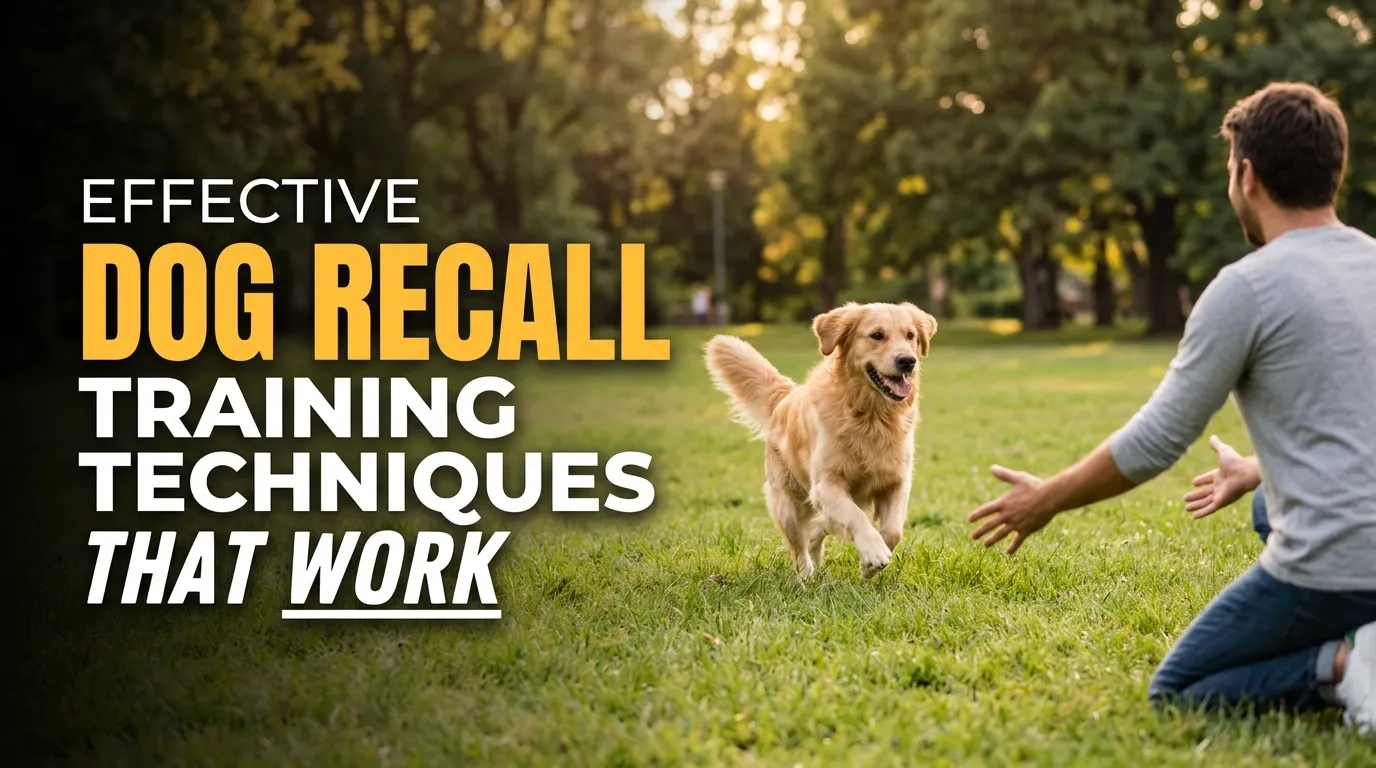
Recall is a simple word for a big thing: your dog comes back to you when you call, every time, even when something fun is going on.
It may be the most useful thing you will ever teach your dog. A dog who comes when called can be kept safe near a road, called off a strange dog, and given more freedom at the park. A dog who does not come lives on a short leash.
Most owners do not fail at this because they do not care. They fail for three common reasons, and all three can be fixed.
Why Recall Matters So Much
Picture this. Your dog slips his collar and runs after a squirrel, straight toward a busy street. If he turns and runs back the second you call, a bad day stays a bad day. If he does not, it can end very badly.
That is the safety side. There is also a daily life side. When you know your dog will come back, walks are calmer. You can use open fields, take him on trips, and let him run and sniff, which is what makes a walk good for a dog in the first place.
Why Dogs Do Not Come When Called
Dogs are rarely just being stubborn. One of these three things is usually in the way.
1. The World Is More Fun Than You
Your dog is sniffing a great smell on a tree. You call him and offer a dry biscuit. The tree wins. It is not that he did not hear you. It is that coming back did not pay as well as staying.
2. Coming Back Has Led to Trouble Before
This is the most common mistake owners make. The dog runs off. It takes 20 minutes to catch him. The owner is upset and scolds him the moment he is caught. But the dog does not link the scolding to running off. He links it to coming back. In his mind, coming to you is what got him in trouble.
3. You Asked for Too Much, Too Soon
A quiet living room is easy. A busy dog park, with kids, balls, and other dogs, is the hardest test there is. If a dog has only practiced at home, he will most likely fail at the park. That is not a bad dog. That is a dog who was pushed up a level before he was ready.
What a Weak Recall Costs You
For the dog, the risks are real: traffic, getting lost, or a fight he cannot be called out of.
For you, the cost is quieter but it adds up. You stop trusting him outside. Walks get shorter and tighter. He spends his life at the end of a short leash or behind a fence, which means less exercise, less sniffing, and a more restless dog at home.
How to Build a Recall That Works
1. Start Where It Is Quiet
Start in a hallway or a quiet room, with nothing else going on. Use top level treats for this: small bits of chicken, hot dog, or cheese. Call your dog in a bright, happy voice. The moment he takes one step toward you, praise him and pay him with the good treat.
Keep it short and easy at first. You want win after win.
For puppies, this early start matters a lot. In our puppy training classes, we build this habit before a pup ever learns that running away is a fun game.
2. Never Punish a Dog for Coming Back
This rule has no exceptions. Even if your dog took ten minutes and chased a bird the whole way, greet him like he did the best thing in the world. Treats, praise, a good fuss.
Coming to you must always be safe and always worth it. One scolding at the wrong moment can undo weeks of good work.
3. Play Hide and Seek
Have someone hold your dog while you go and hide in another room. Call him once, in a happy voice. When he finds you, pay him a handful of treats, not just one.
Dogs love this game, and it teaches the exact skill you want: run toward your voice, fast, and good things happen.
If your timing feels off, or your dog is not getting it, it helps to have a trainer watch you work. In a private lesson, a trainer can see the small things, like your tone of voice or the moment you pay the treat, and fix them on the spot.
4. Use a Long Line Outside
When your dog is solid at home, do not go straight to off leash at the park. Use a long line instead: a training leash of 20 to 30 feet. Your dog can wander and sniff and feel free, but you still have a safety line.
Call once. If he comes, pay him well. If he does not, guide him back in with the line, calmly, and try again at a shorter distance. This stops him from learning that your call can be ignored.
Two safety points. Clip the line to a harness, not a collar, so a sudden stop does not hurt his neck. And never let the line wrap around your hand or legs.
Good leash skills sit under all of this work. If your dog still pulls or lunges on a normal leash, fix that first: loose leash walking is the base this work stands on.
5. When Fear Is the Real Problem
Some dogs do not run off to play. They bolt because something scared them: a loud truck, a strange dog, a sudden noise. A dog in that state is in a panic. He is not choosing to ignore you. He cannot think at all.
Treats and games will not reach a dog like this. He needs help with the fear first. That is the work our behavior programs are made for. Once the fear is lower, the dog can hear you again, and recall training can start to work.
The Goal: Off Leash, Where It Is Allowed
A strong recall is what makes off leash time possible. It is also earned in stages: house, yard, quiet field, then busier places, one step at a time. Earning that off leash freedom takes weeks of small wins, not one brave afternoon at the park.
Be honest about the rules where you live, too. Many parks and neighborhoods require a leash by law. A good recall does not replace the law. It keeps your dog safe in the moments when things go wrong.
If off leash reliability is your goal and you cannot get there on your own, a stay in a board and train program gives your dog daily practice with a trainer, in set ups built for this skill, and gives you the same plan to keep up at home.
A Quick Word Before You Start
Recall is built in small wins, repeated a lot. Five good minutes a day beat one long session on the weekend. Keep the pay high, keep your voice happy, and never let coming back be the thing that gets your dog in trouble.
If you are working on this and your dog still will not look up when you call, talk to us. Our training starts with the small things, like timing and pay, and you can contact K9 University and tell us where your dog gets stuck. Call us at 405-231-4335. A recall you can trust is not luck. It is trained, one small win at a time.